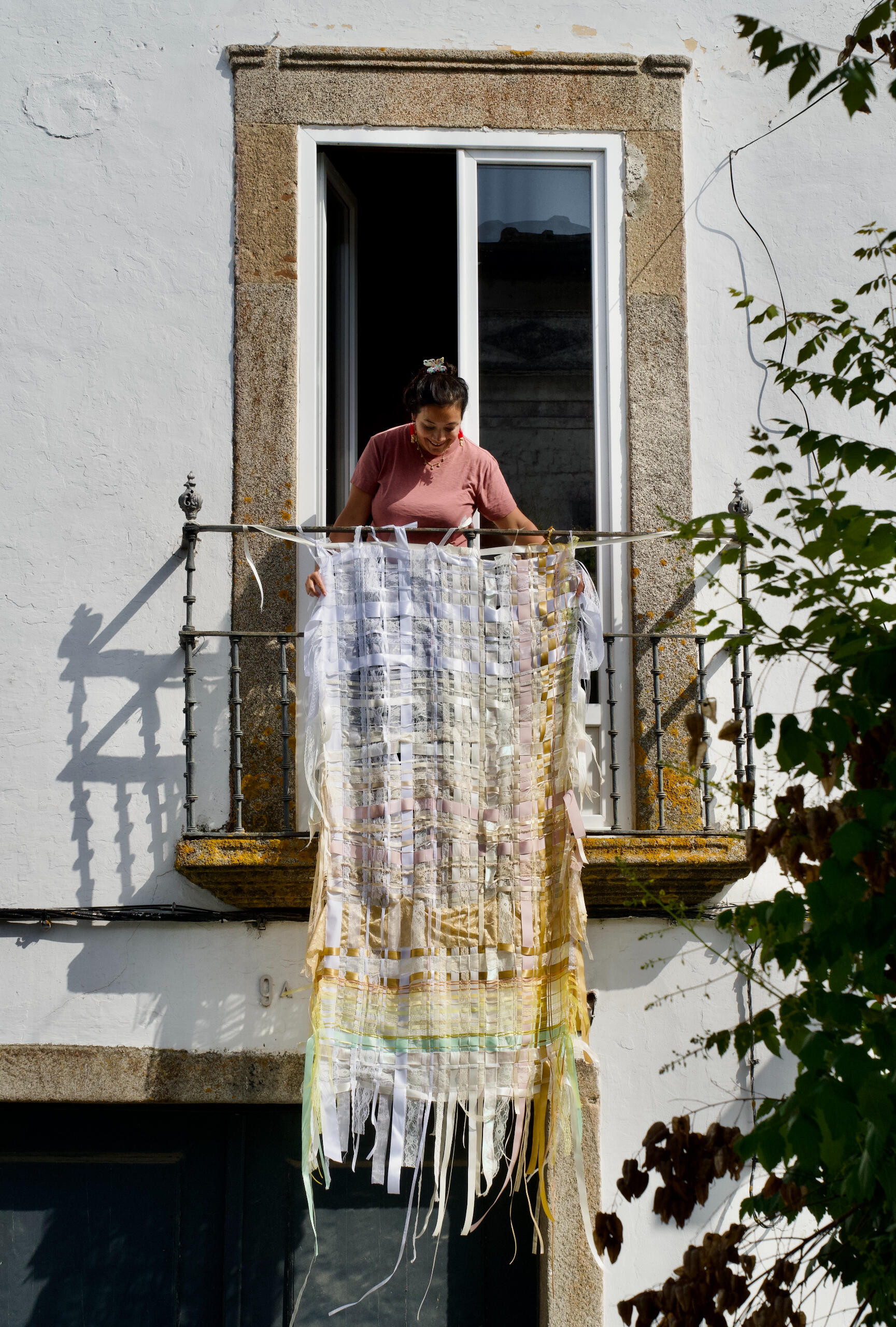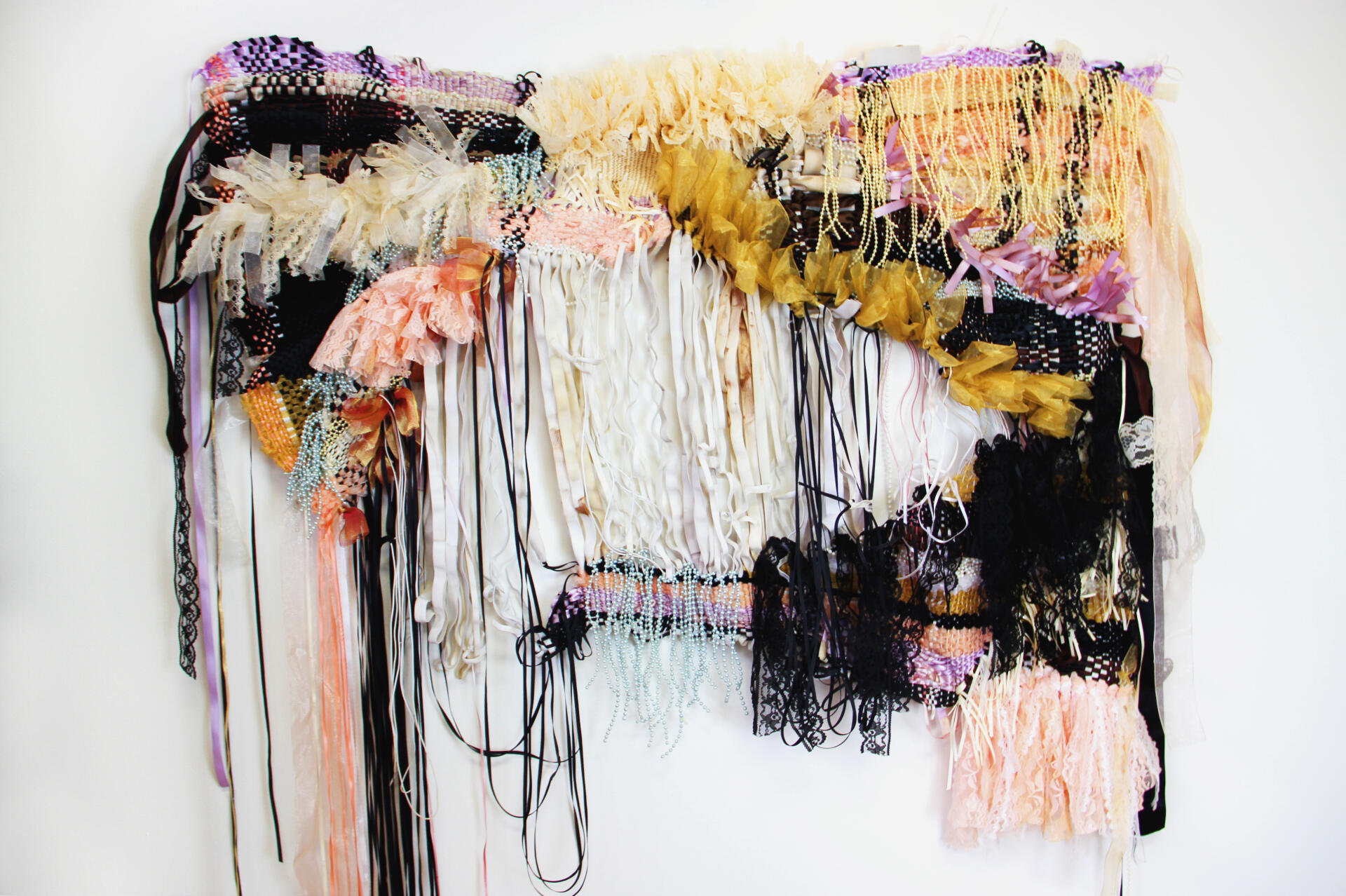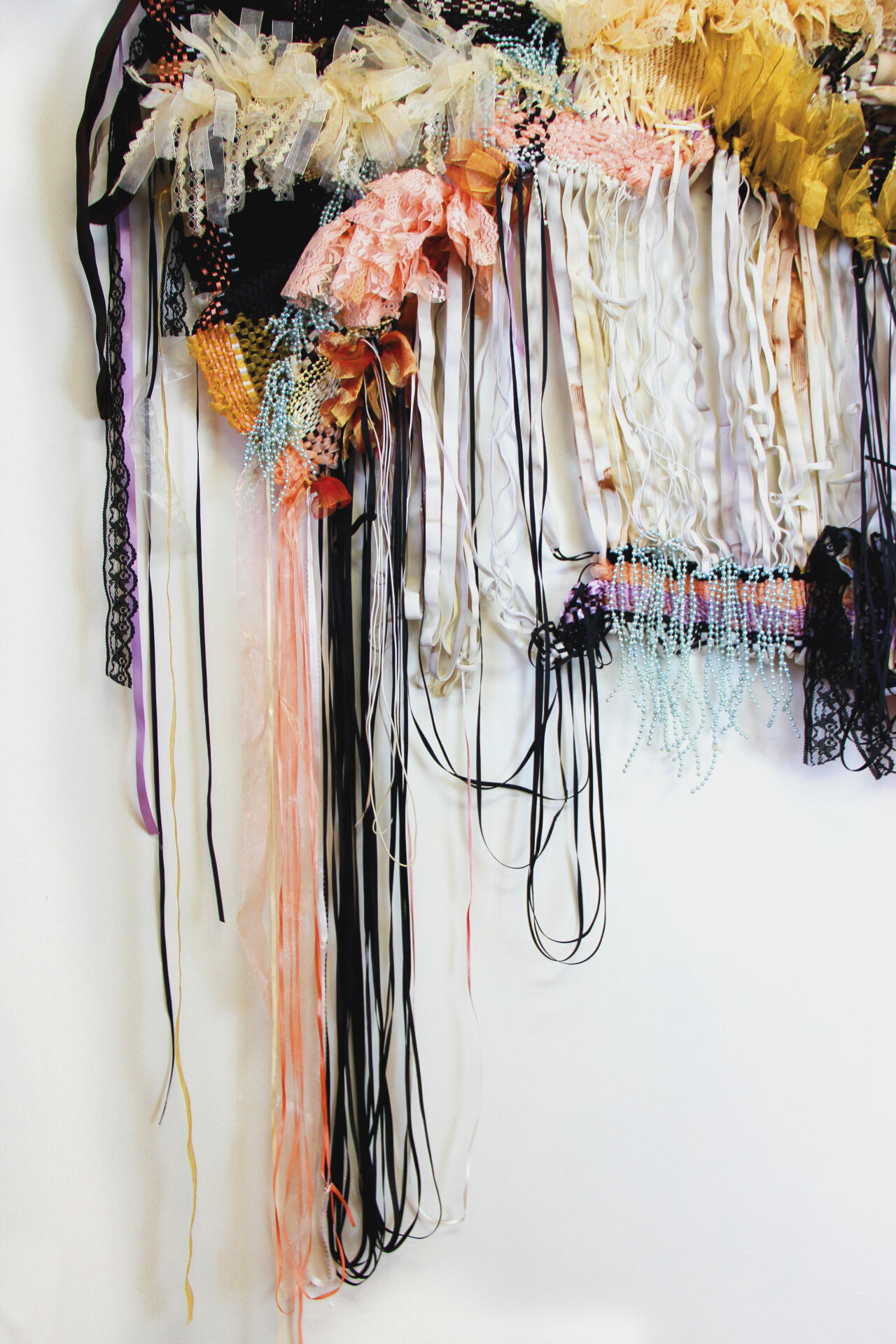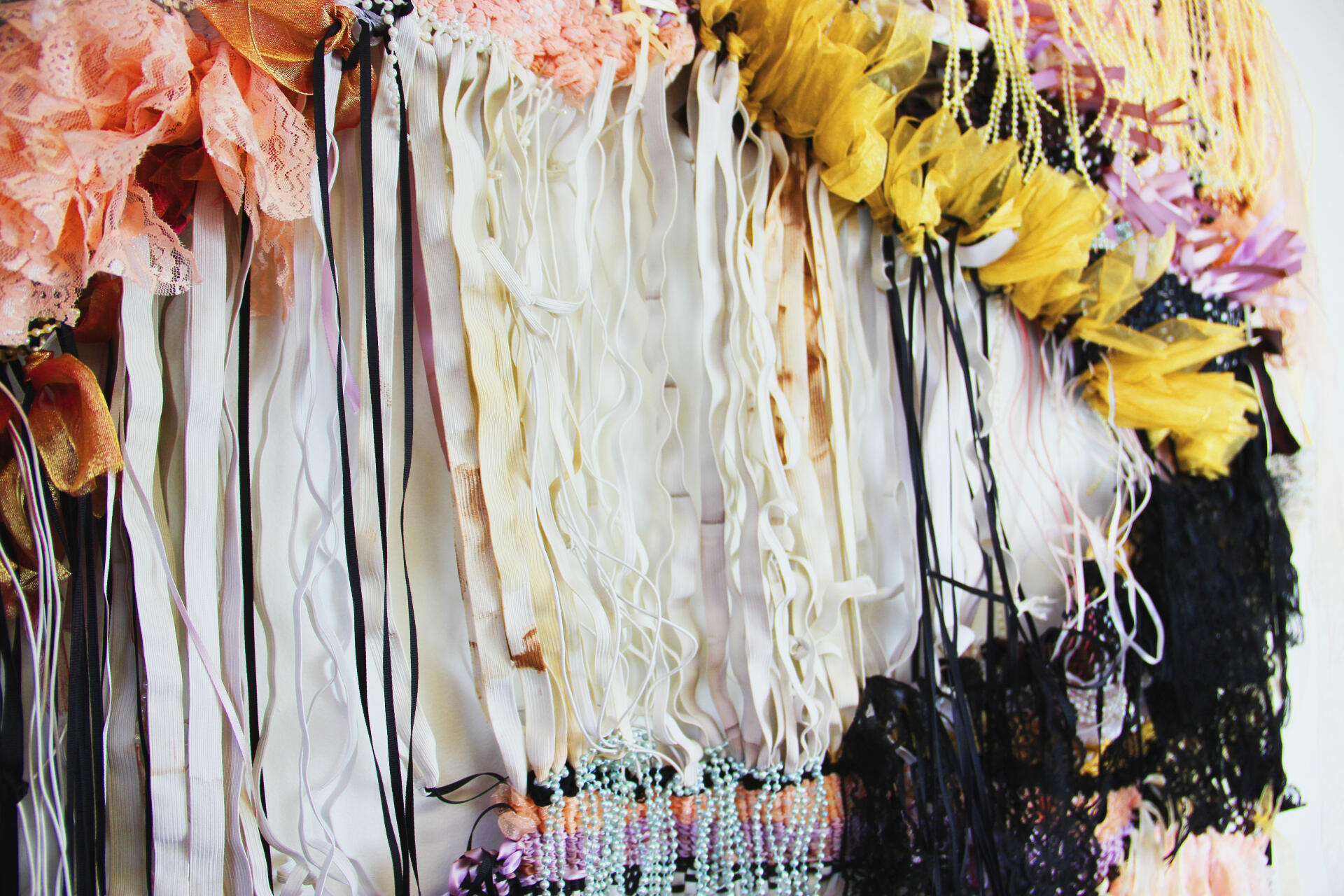
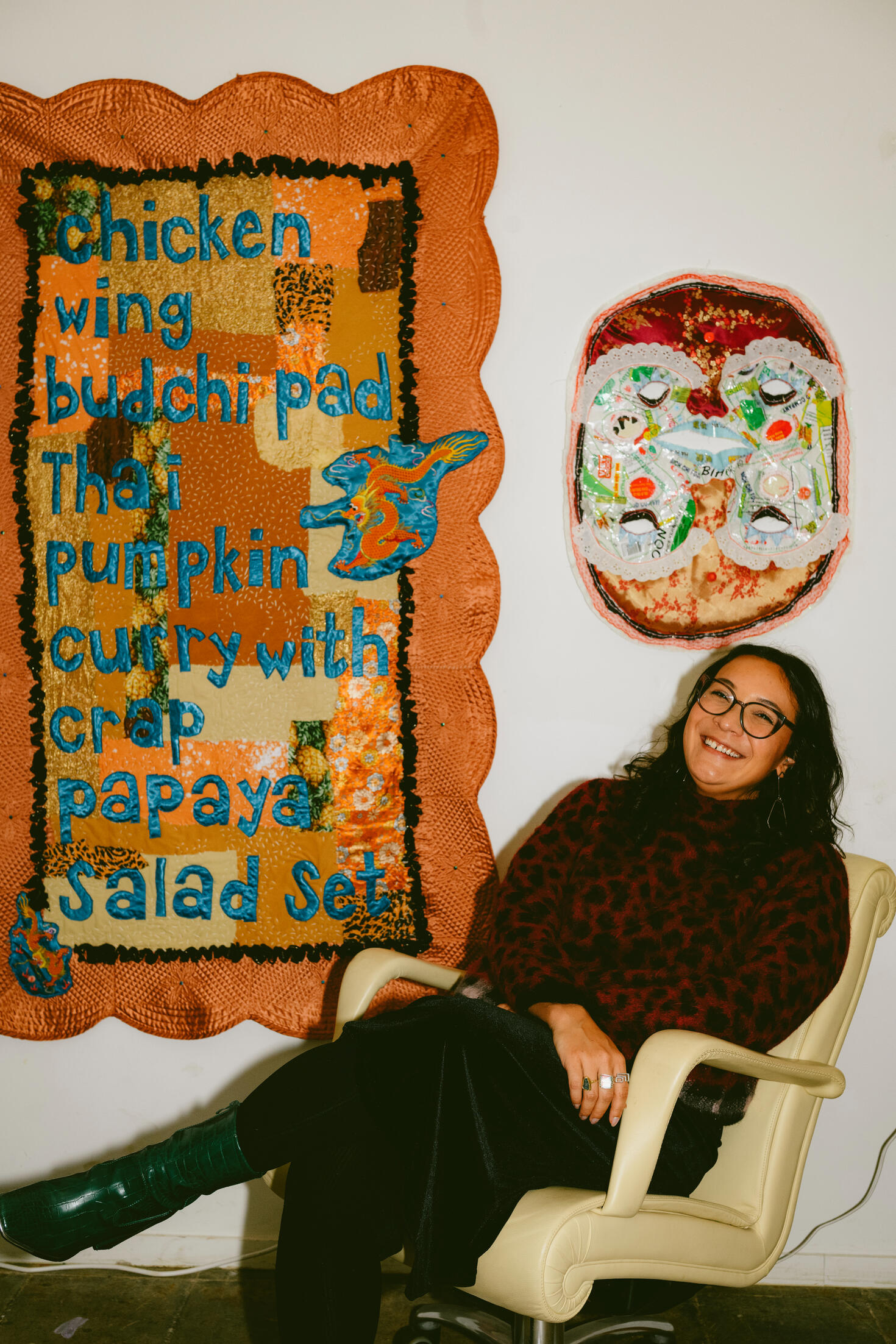
Erin C. Doherty is an interdisciplinary artist originally from New Orleans, LA, USA, based in Rotterdam, with a studio in Amsterdam. She works primarily with craft- and fiber-based practices. As a second-generation mixed Indonesian American, her work is shaped by hybrid identity, migration, and material histories, which function as both subject matter and critical framework. Through textiles, handcraft, and found materials, she explores how cultural memory, labor, and everyday ritual are preserved, altered, and performed across geographies.Doherty holds a BFA from the School of the Art Institute of Chicago and an MA in Visual Arts and Post-Contemporary Practice from the Master Institute for Visual Cultures in the Netherlands. She has exhibited in the United States and several European countries, including the Poznan Textile Biennale in Poland and the Limburg Biennale in the Netherlands. In 2025, she attended the Penland School of Craft for textiles with support from the Mondriaan Fund. She is a co-founder of Fiber Art Studio at Broedplaats VKG in Amsterdam.


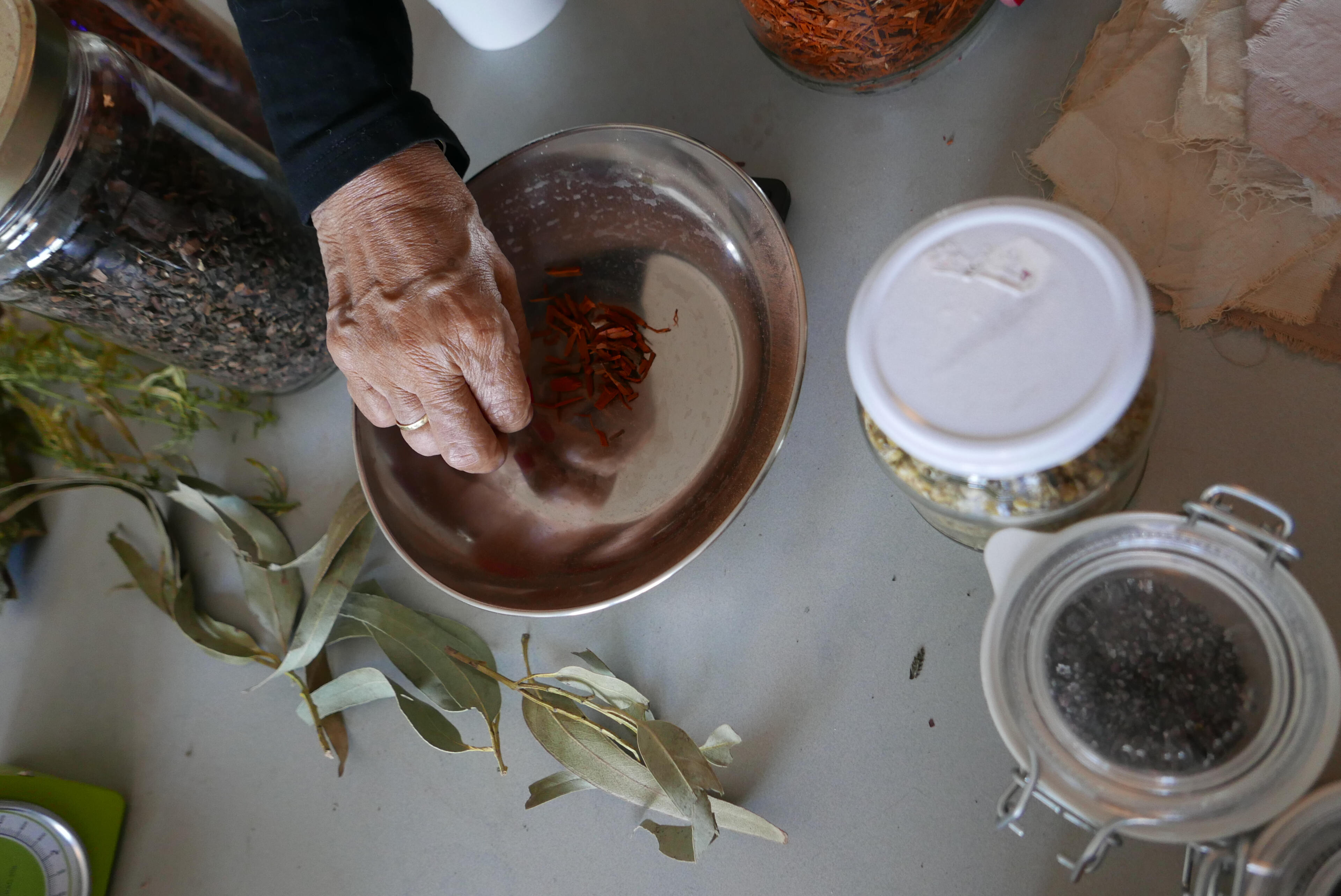
Fiber Art Studio was co-founded by Erin C. Doherty and Raven Kiss in their Amsterdam studio to offer textile and fiber workshops and events. The studio was created as an intimate setting where they could share their personal art practices with community members, fostering both skill-building and connection. Both artists have backgrounds in education and specialize in specific fiber techniques. Their collective focuses on sustainable materials and craft. Stay tuned for future programming by following the Fiber Art Studio Instagram page.
Hand-embroidered commission to adorn a wool baby blanket for the client’s nephew. The message was rendered in the client’s handwriting. Color and fabric choices were developed collaboratively between the artist and the client.
Mural created for a dance studio. The client requested a colorful, energetic, and abstract design incorporating the studio’s logo colors—Artivism pink and black. The artist collaborated with the client on accent colors and the placement of cascading geometric shapes to create a dynamic composition that moves throughout the space.
Hand-drawn welcome sign design created in ink, colored pencil, and watercolor. The design was enlarged and printed for the event. The clients collaborated with the artist on the text, theme, and layout.
Series of eight paintings created for hallway niches in an event and rental space on a secluded natural property. The works reflect local flora and fauna found on the site. The paintings were executed in acrylic on Venetian plaster–treated wood panels.
Series of more than fifteen individual paintings depicting characters, sets, and props from the film MOLAR (2025). The works were created using watered-down acrylic on paper and later incorporated into the final design. The artist collaborated with the client on the color palette and overall style.
Four seascape paintings depicting crustaceans found along the coast of Louisiana, created for the hallway of an office building housing law offices. The works were executed on watercolor paper using ink, watercolor, gouache, and colored pencil. The clients had the pieces framed and matted locally.
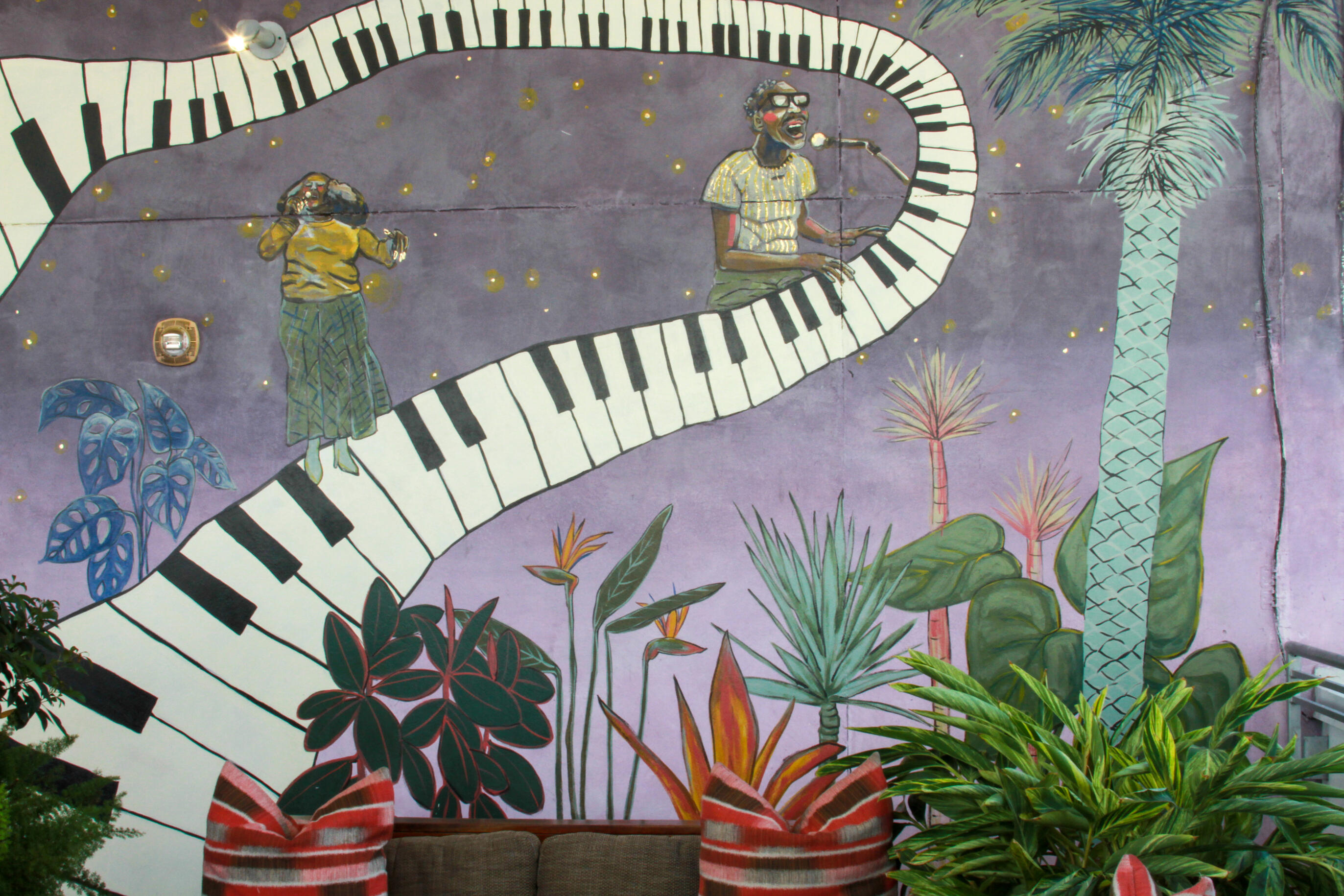
Two murals created in separate areas of the rooftop bar at the Troubadour Hotel. The client requested a New Orleans music–themed concept. The walls were first treated with a Venetian plaster gradient, then painted with exterior house paint; gold leaf accents were added before the works were sealed. In the first mural, local musicians central to New Orleans’s musical history cascade along a piano amid tropical flora and a starry night sky. The second mural features oversized brass instrument silhouettes that overlap and drip across the gradient.
(2025)
Fiber
Found and second hand fabrics, sequins, threadText from my mom about our favorite dishes at Budsi’s Authentic Thai Restaurant in New Orleans, LA, USA.
March 28, 2025
6:36 pm
(2025)
Fiber
bedsheets from my late grandmother’s house, other secondhand textiles including Indonesian batik and ikat woven textiles, red thread, plastic heart beads“If it was a snake, it would’ve bit me” is a Southern expression meaning what you were seeking was right in front of you. My late grandmother, who was like a second parent to me, said it often. This piece maps her home, with four snakes—my grandmother, mother, brother, and me—tracing its pathways, made from repurposed textiles that reflect our household’s mixed identity through color, texture, and memory. In the end, she isn’t lost; she has been with me all along.
(2025)
178cm x 127cm
Second-hand fabrics, sheets, napkins, pillowcases, clothing, and tablecloths
(2025)
157cm x 124cm
Second-hand fabrics, sheets, napkins, pillowcases, clothing, and tablecloths
(2025)bedsheets and batik napkins from my late grandmother’s house, other secondhand textiles, red threadMy grandmother and I were connected by something beyond blood—an otherworldly, mystic bond rooted in shared creativity and love. Quilted with red thread, this piece honors that connection across the seen and unseen. In many Asian cultures, red thread symbolizes an invisible tie between those destined to meet—a sentiment that deeply resonates with how I feel our lives were intertwined.
(2023)
60 cm x 57 cm
embroidery thread, found and second-hand fabrics, glass beads, lace, metal wire, packagingAn embroidered version of a Lega Bwami Tricephalous-face mask (Zaïre, now the Democratic Republic of Congo).The original version of the mask was traditionally used in rituals to mark the transition into higher levels of Bwami society. This version is a meditation on multiplicity in identity; these hand-sewn mask gestures toward material hierarchies by utilizing high and low materials embroidered with a chain stitch to signify being trapped in performative cycles. The mask plays with the notions of high and low as performative opulence can be seen as a symptom of colonial trauma.
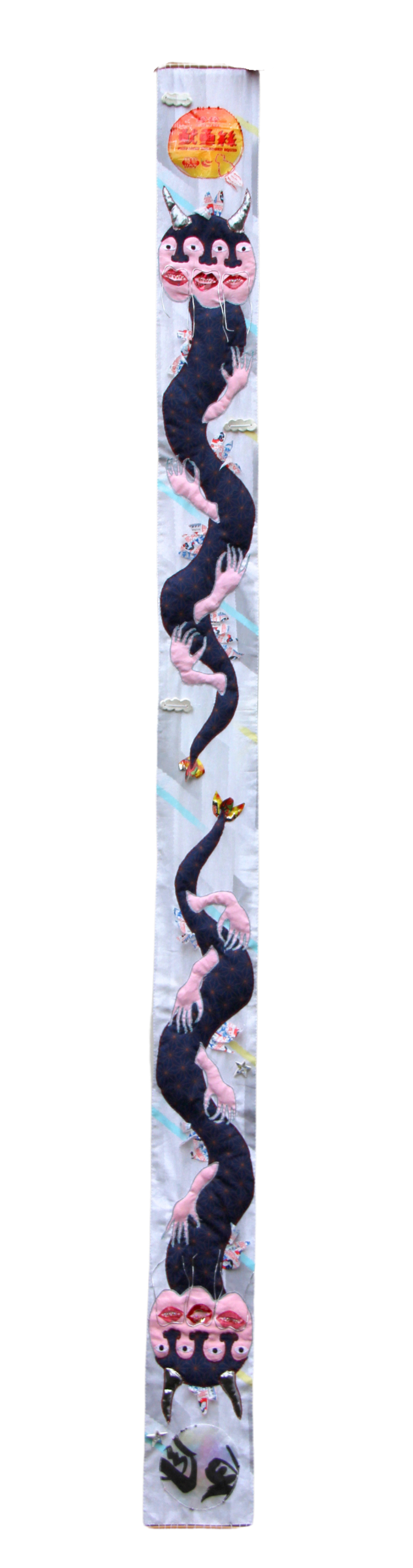
(2023)
220 cm x 20 cm
chopsticks, elastic, embroidery thread, found and second-hand fabrics, glass beads, lace, packaging, porcelain beadsLucky, powerful, and potentially destructive, the symbol of the dragon is pervasive in both Western and Eastern pop culture and myth. This Ghidorah resides in two realms: the Ghidorah of the day (sun) and the Ghidorah of the night (moon), representing the balance of action and emotion. They are the gods of destruction, extraterrestrial energy beings from another dimension, looming over Earth. Ghidorah is a talisman of luck against the imbalance of power, ready to descend on Earth to consume us all.
(2023)
68 cm x 55 cm
buttons, embroidery thread, found and second-hand linen, lace, packagingThis embroidered bicephalous face mask serves as a meditation on Doherty's struggle with bipolar disorder and performativity. The mask gestures towards duality in identity and flipping from high to low both in materiality and mental state. The work focuses on cycles within humanity, production and consumption, collecting and purging, as well as the cycles of mania and depression experienced in bipolar disorder. Ritual making is a part of the artist’s process as hyper productivity happens during periods of mania. Packaging like the mask is the alluring protective layer, a talisman of protection of liminal identity.
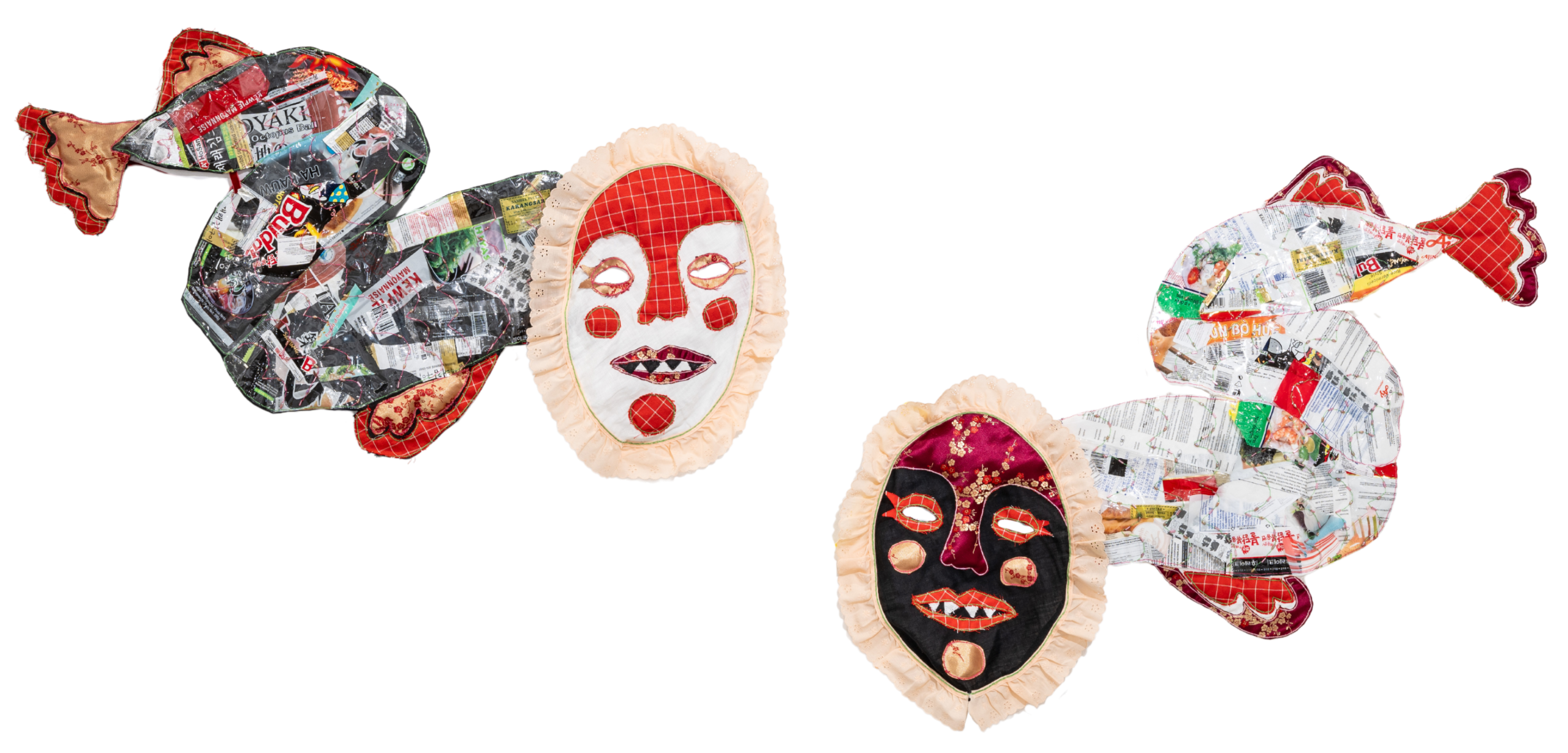
(2023)
92 cm x 56 cm each, diptych
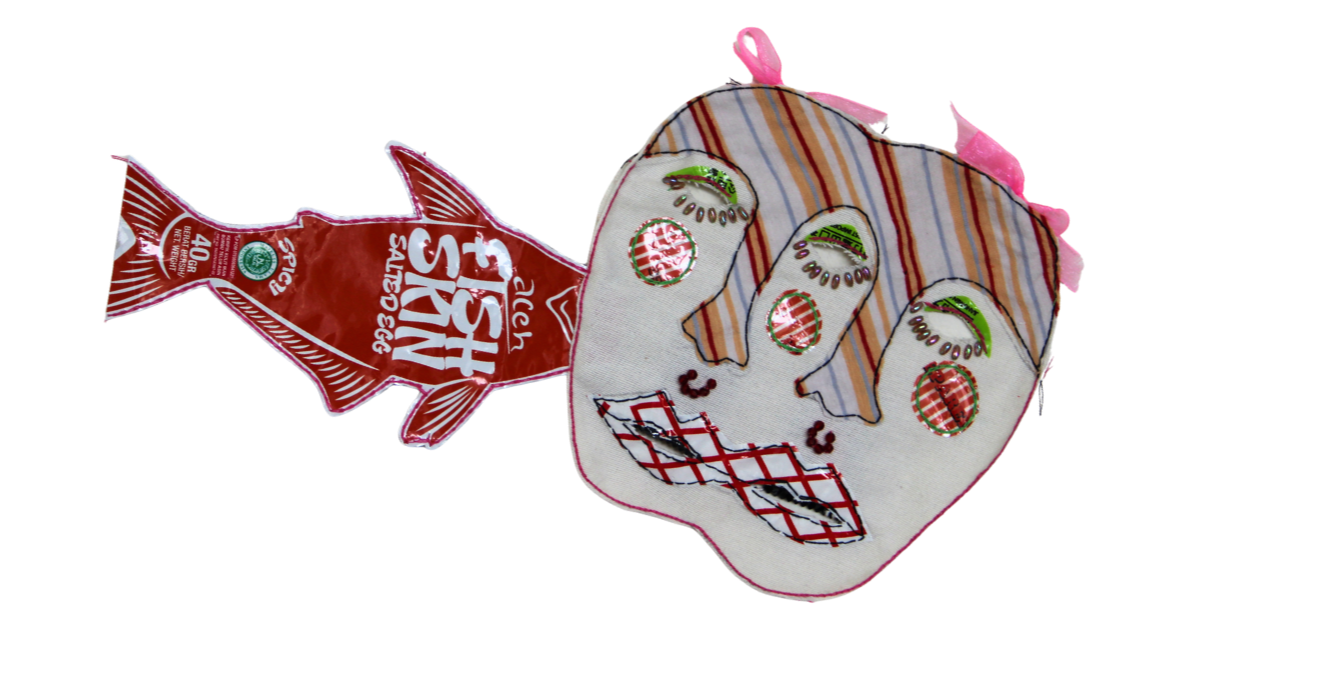
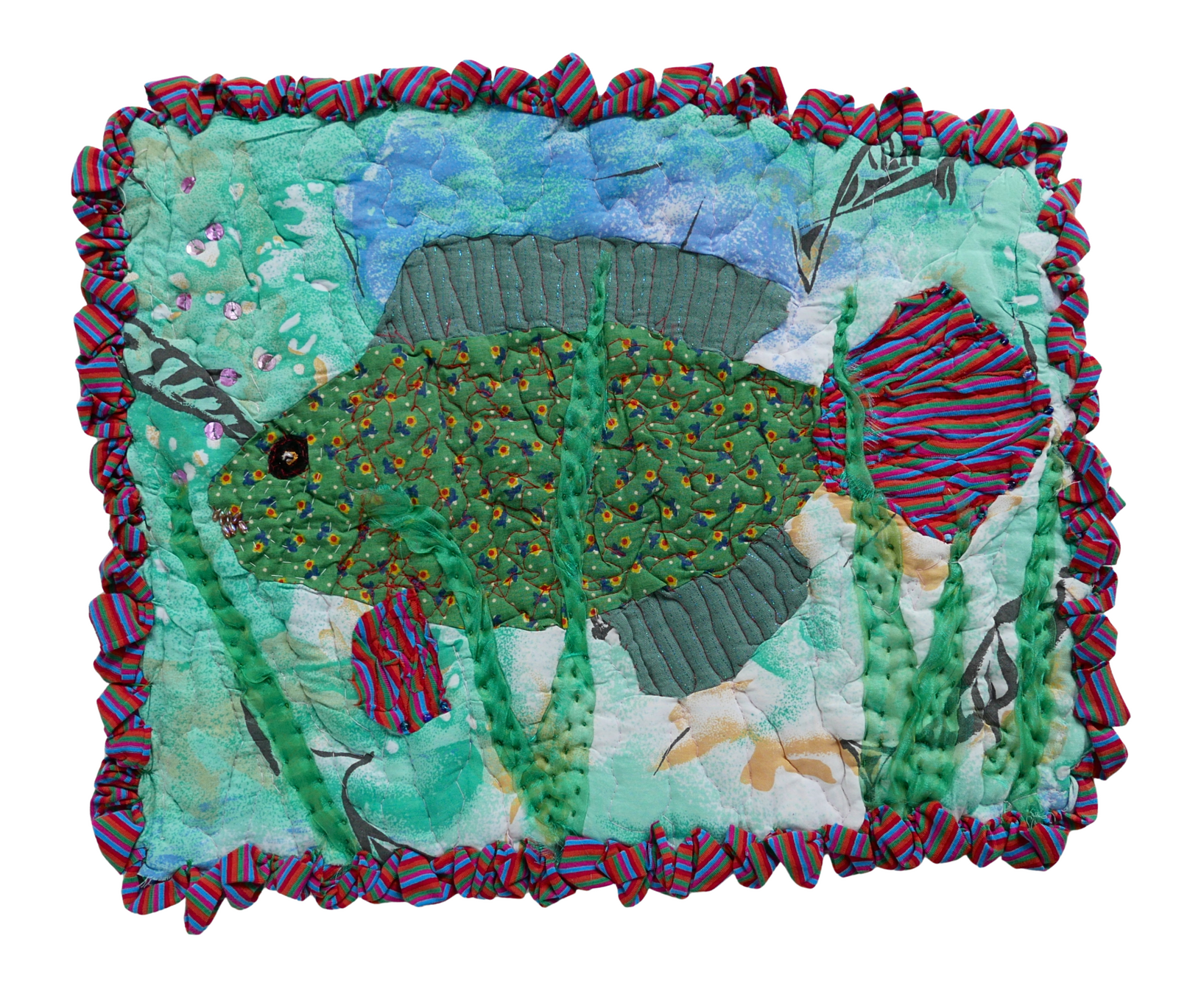
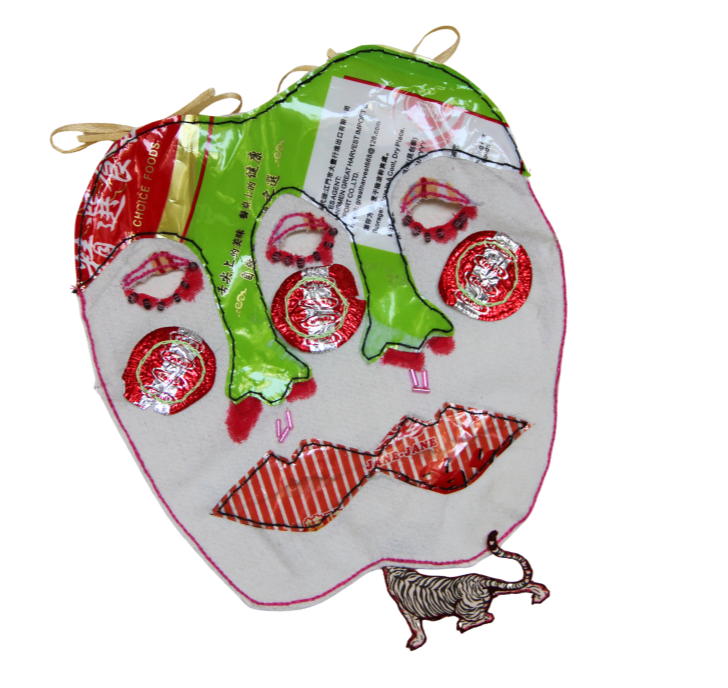
embroidery thread, found and second-hand fabrics, glass beads, lace, metal wire, packaging, plastic beadsThese twins of embroidered construction are a mirror of each other, but they are different. Stemming from the Taoist idea that the power of the universe has two sides, dark and light, yin, and yang, these pieces are connected by their differences with a bit of each within the other. The fish are the same in method and materials with recycled fabrics, linen, and packaging, but they are simultaneously the opposite in color and position. The performance of identities can ebb and flow, each retaining a bit of the other. Mixed bodies navigate the push and pull of liminality in identity. The masks aim to use waste as a window, a potential magic folded into the mundanity of everyday ritual and performativity.
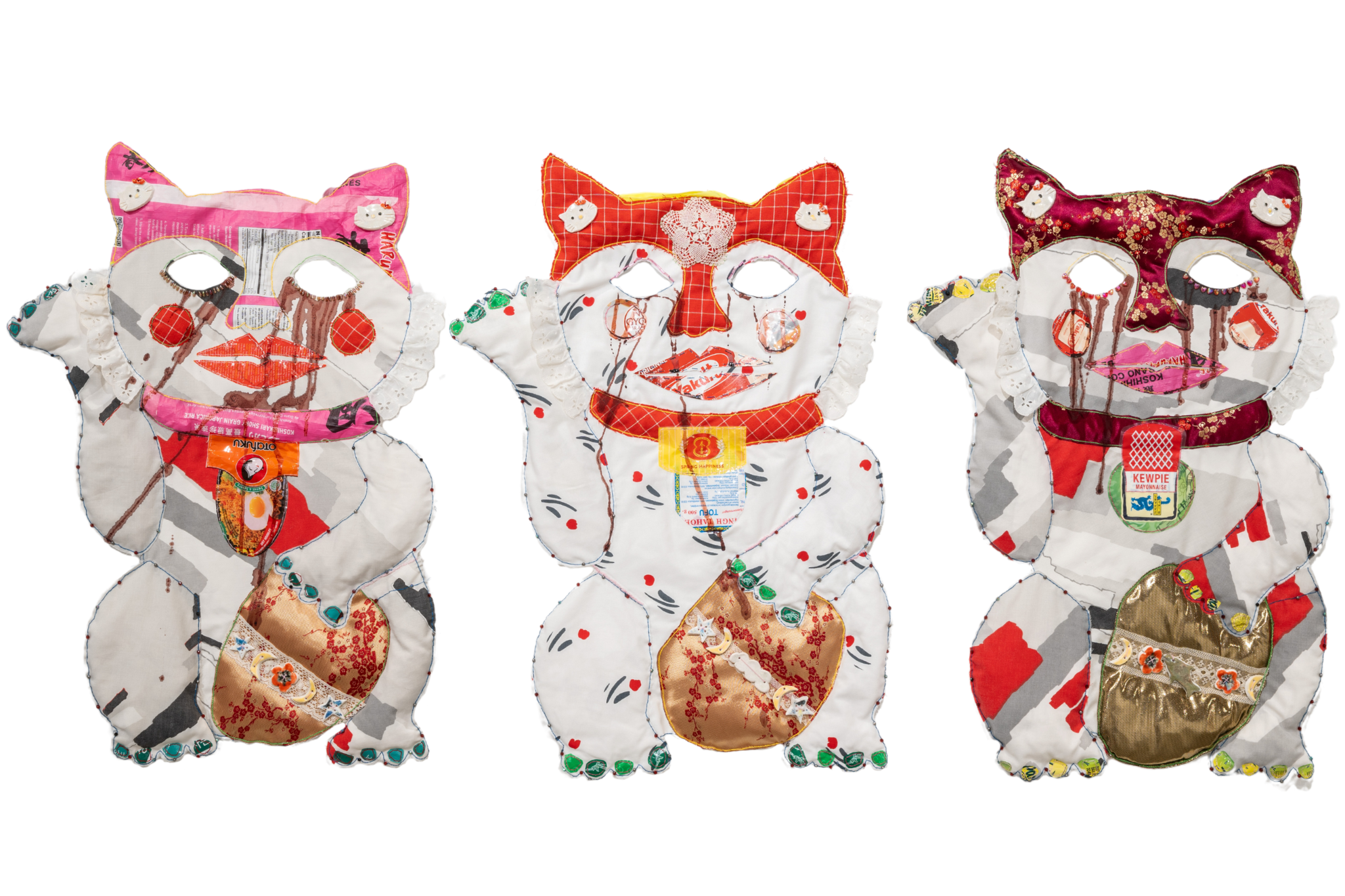
(2023)
69 cm x 48 cm each, triptych
artist’s blood, embroidery thread, found and second-hand fabrics, glass beads, lace, metal wire, packaging, porcelain beads, ribbonThe lucky cat is a pervasive symbol of Asian establishments worldwide. It is a lucky talisman to bring customers and good fortune. With the right arm forever raised, the wearer is stuck in a state of desire. Luck is tied to fortune in this talisman and the never ending desire to lure money to the wearer. Maneki Neko cats function as talismans of good fortune, but are also co-opted into the cycle of neoliberal greed (buy a talisman to bring more fortune). This is mirrored in contemporary craft as the use of craft in rebellion is inherently flawed as it still functions within the capitalist system. At the opening of the exhibition, Adrift, A Shift at Willem Twee Kunstrumie, Doherty anointed the Maneki Neko masks with her blood to symbolize immense disillusionment with capitalist greed.